Skip to content

Our own product · Relavya

Private beta

Remember everyone you meet. Follow up like you mean it.

Relavya is our own product for founders, consultants and B2B sellers who meet people at conferences, expos and meetups. After an event, it tells you whom you met and what mattered, and lets you send the right follow-up from your own account. It is in private beta.

The problem

You collect visiting cards, WhatsApp numbers and LinkedIn connections, but by the time you sit down to follow up, the context is gone. Which conversation was about pricing? What did you promise to send? A generic message feels awkward, so the follow-up is postponed, and usually never sent.

Screens are from Relavya's demo account, and the network animation uses sample people and events; real event names and places in the demo were replaced. Relavya is in private beta.

Why We Built Relavya

A good conversation at an event deserves a follow-up within a day or two. Most never get one, not for lack of intent but for lack of context.

  • Context fades fast

    A name and a number survive the event. What you discussed, and what you said you would send, usually do not.

  • Generic messages feel awkward

    Without a detail to anchor it, a follow-up reads like a template, so it gets put off until it no longer makes sense.

  • A phone book is not a memory

    Contacts store numbers. They do not know where you met, what mattered to the other person, or what is due next.

What We Built

  • Quick capture where a name is the only required field, with the current event already filled in
  • A memory of what you talked about and a next step with a due date, kept with each person
  • Visiting-card reading that fills in the fields, flags the ones it is unsure of and saves nothing until you confirm
  • Paste a signature or a message and it is split into name, company, phone and email
  • A Today view: overdue follow-ups, follow-ups due today and the people you met this week
  • Ready drafts for WhatsApp, LinkedIn and email, for six purposes such as a first follow-up, sharing a resource or asking for a meeting
  • Optional help with the wording that never invents facts, and keeps your draft if it fails
  • Events, people search and filters, reminders, occasion greetings, and a digital card with a QR code

How It Works, Step by Step

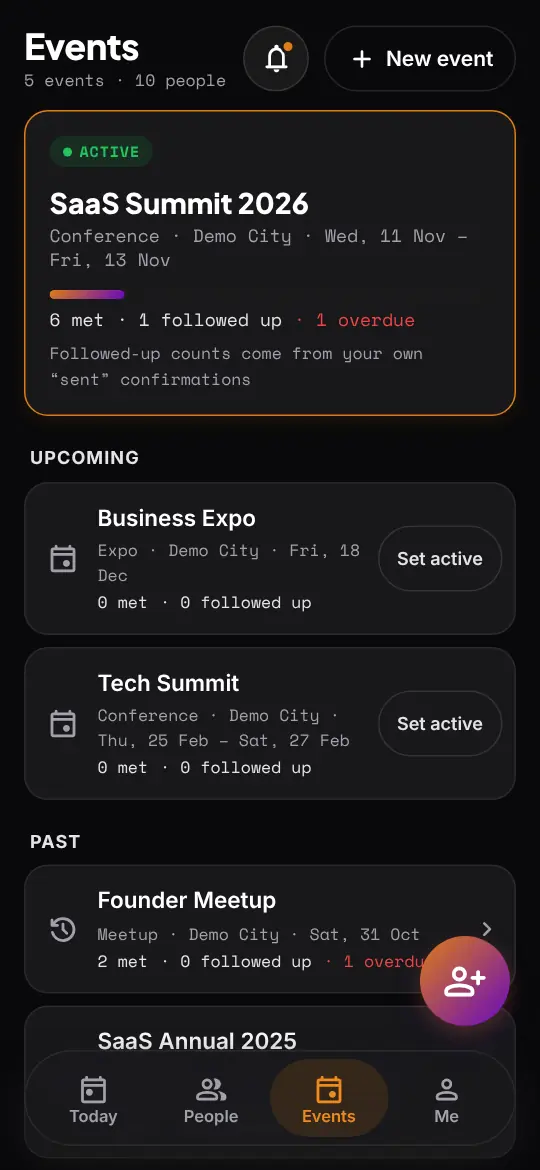
  1. Step 1: Set the event once

    Create the conference, expo, meetup or client meeting. Everyone you save from then on is filed under it.

    Relavya's Events screen with the active event, its people met and followed-up counts, and upcoming and past events
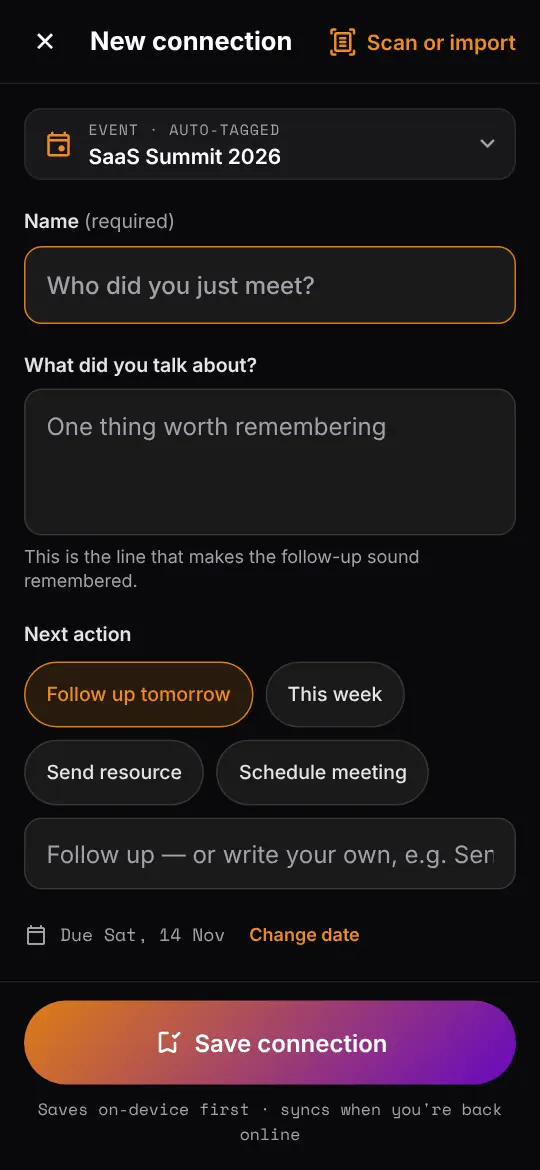
  2. Step 2: Save a person between conversations

    A name is all you need. Scan their visiting card or paste their signature to fill in the rest. It works without signal and syncs later.

    The New connection screen with the event already filled in, a name field, what you talked about, next-action chips and Save connection
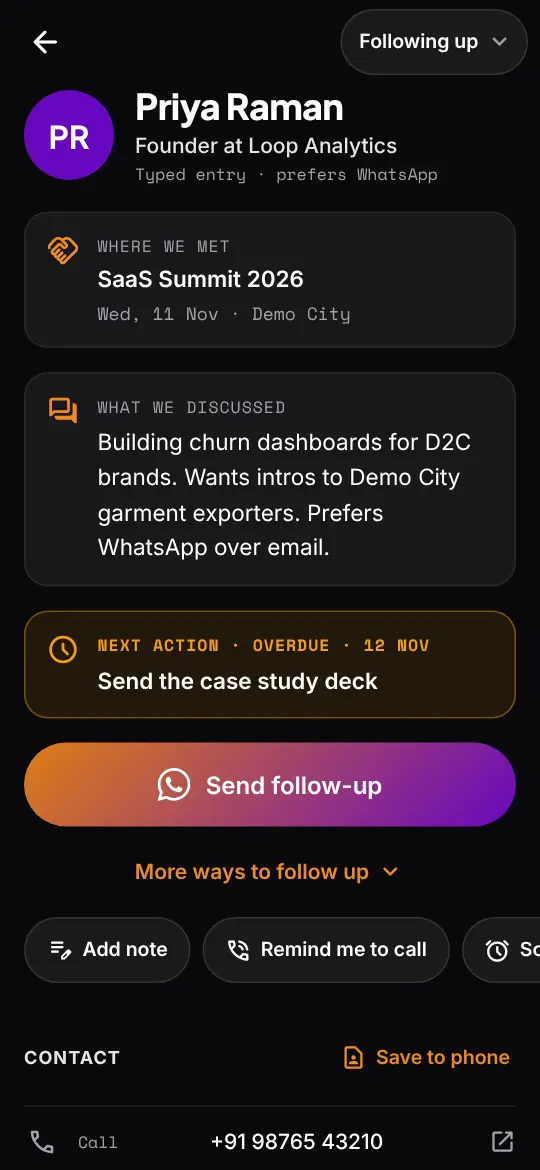
  3. Step 3: Keep the one thing that mattered

    Save what you talked about and the next step you promised, with a date. Add notes as the relationship grows.

    A person's profile showing where you met, what you discussed and an overdue next action, with a Send follow-up button
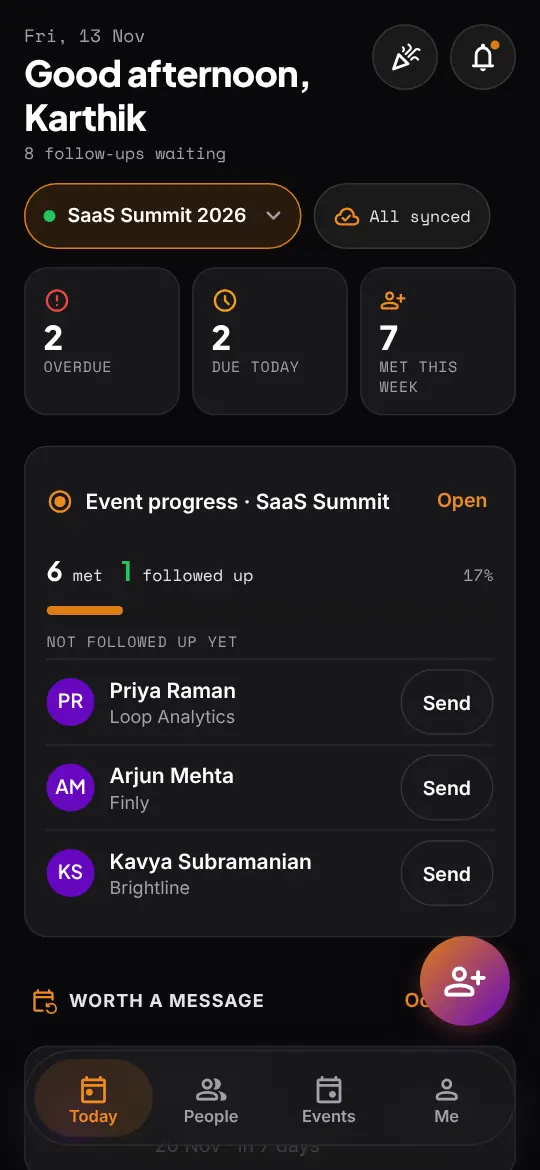
  4. Step 4: See who is due

    Today lists who is overdue, who is due today and whom you met this week. Plain dates decide what is due, not guesswork.

    The Today screen with counts for overdue, due today and met this week, and the event's people not followed up yet
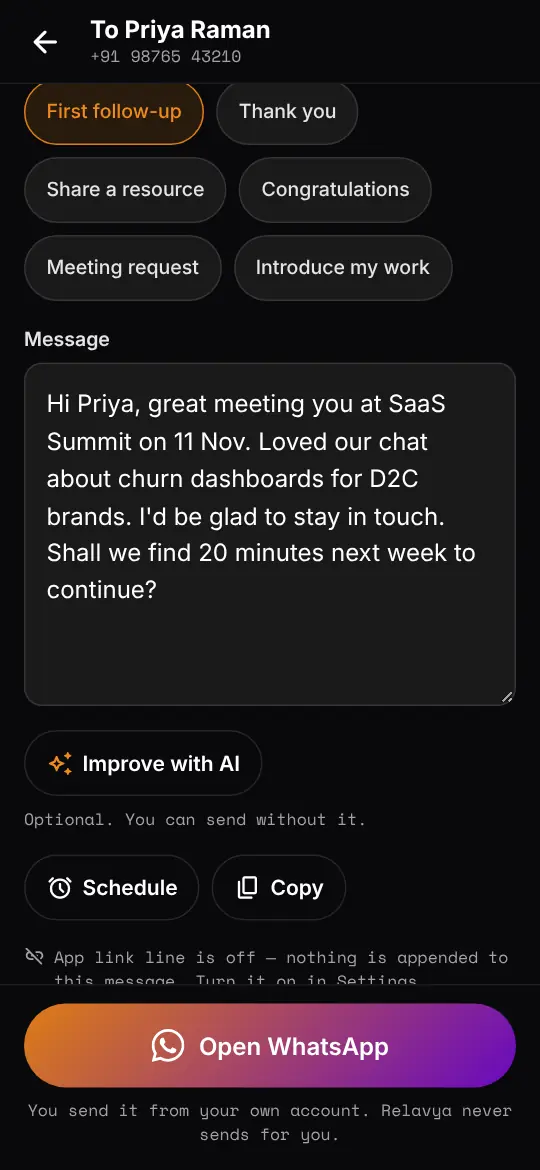
  5. Step 5: Open a ready follow-up

    Choose WhatsApp, LinkedIn or email and what the message is for. Relavya writes a personal draft from what you saved, and you edit it.

    The compose screen with message types such as First follow-up and Meeting request, and a personal draft that mentions the event and the topic
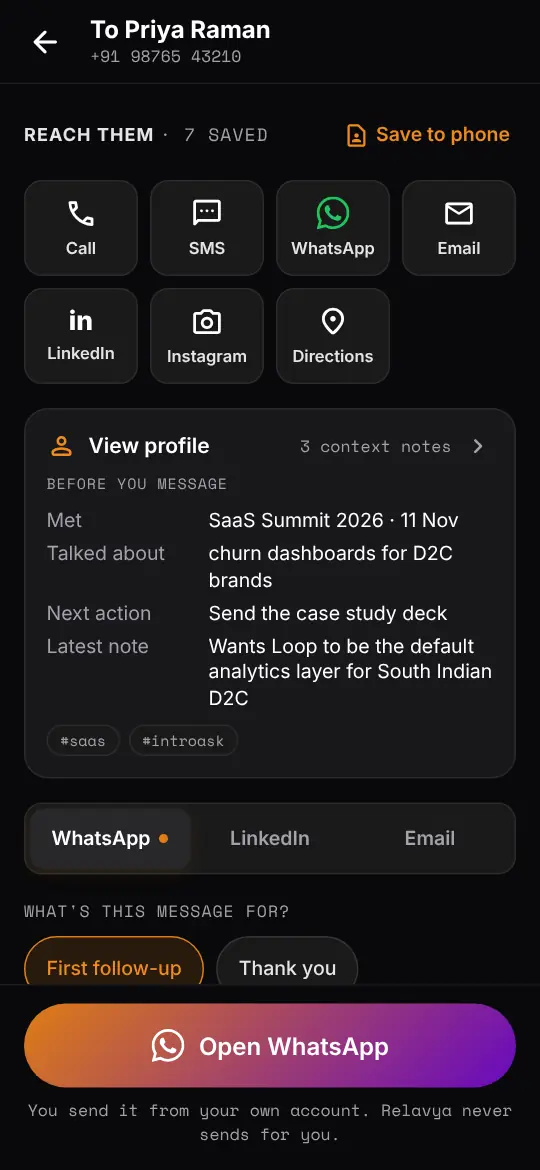
  6. Step 6: Send it from your own account

    The message opens in your own WhatsApp, LinkedIn or email, and you press send. Relavya never sends anything itself.

    The compose screen with ways to reach the person, a summary to read before messaging, and an Open WhatsApp button noting that Relavya never sends for you
  7. Step 7: Confirm it was sent

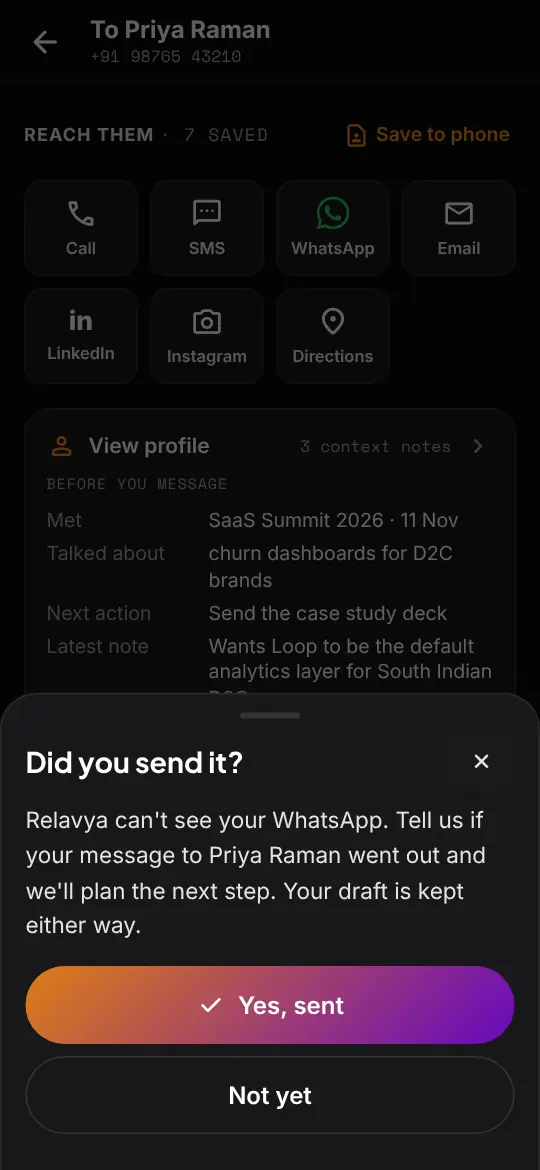
    Relavya asks “Did you send it?” Only “Yes, sent” records the follow-up and lines up the next step. “Not yet” changes nothing.

    The Did you send it? sheet explaining Relavya can't see WhatsApp, with Yes, sent and Not yet buttons

Built so your network stays yours

  • Your people, notes and events are private to your account and are never shared with other accounts.
  • Relavya never messages anyone for you. Every message is sent by you, from your own account.
  • A follow-up is recorded only when you confirm it was sent. Nothing is assumed.
  • Saving a person and writing a draft never depend on AI or a network connection.
  • Your public card shows only the fields you choose to publish.
  • You can export everything as JSON or CSV, or delete your account, from Settings.

Have a Similar Problem? Let's Talk It Through.

Your workflow will not be identical, and it does not need to be. Tell us what is slow, manual or missing, and we will tell you honestly whether something like this would help.

More use cases

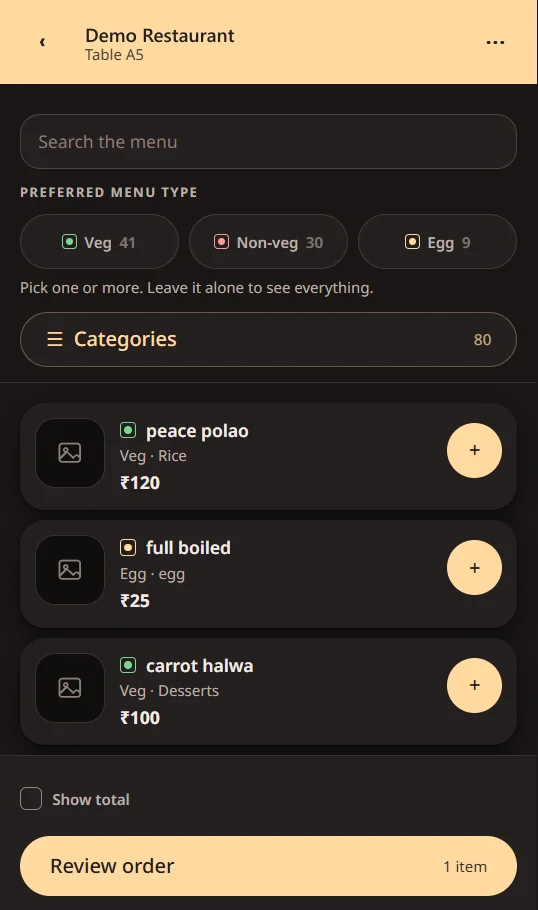
  • A restaurant's QR menu on a phone, with veg, non-veg and egg filters and dishes that can be added to the order

    Client project · Restaurant · Anonymised

    Make every table visit an opportunity to serve better.

    The problem: Guests need an easier way to browse, order and ask for service — without adding work for the floor team.

    What we built: A table-QR menu for ordering and service requests, with the floor team and the owner seeing the same requests the moment a guest taps.

    See how it works: Make every table visit an opportunity to serve better.
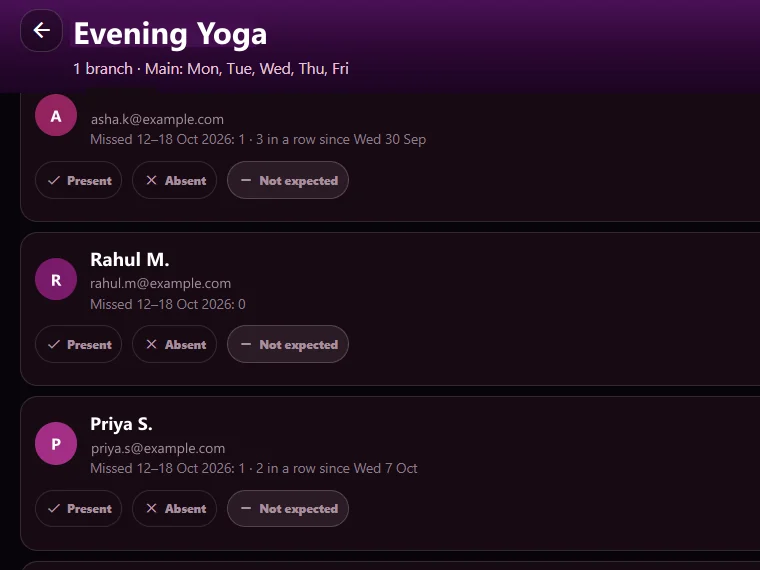
  • A course's attendance list showing each member's missed sessions and present, absent or not-expected marks

    Client project · Fitness academy · Anonymised

    Turn attendance records into proactive member engagement.

    The problem: Academies and fitness studios often notice repeated absences only after a member has already drifted away.

    What we built: Online-class attendance is imported, members who miss a set number of sessions are flagged, and course-wise reminder emails go out — with a record of every email sent, bounced or excluded.

    See how it works: Turn attendance records into proactive member engagement.
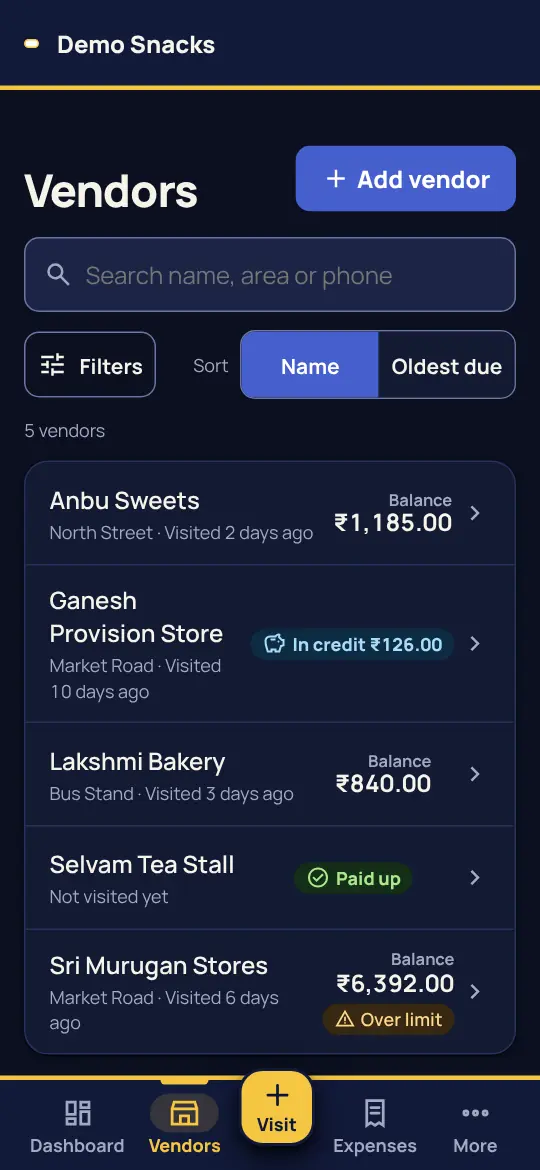
  • The owner's list of shops on a phone, each with its balance, a paid-up or in-credit tag and an over-limit warning

    Client project · Snack maker · Anonymised

    Every shop visit — returns, delivery and payment — in one go.

    The problem: A snack maker supplying local shops kept returns, deliveries and payments in a notebook. What each shop owed, which stock was expiring and whether the business made a profit were all guesswork.

    What we built: A phone app for the owner: one visit records returns, the new delivery and the payment, opens WhatsApp with a ready summary and a UPI pay link, and shows balances, expenses and profit.

    See how it works: Every shop visit — returns, delivery and payment — in one go.
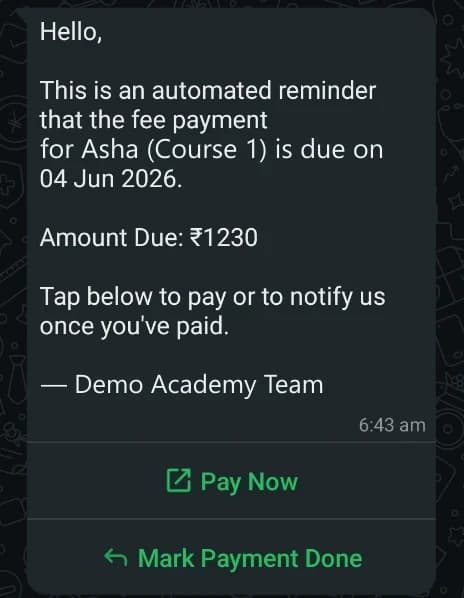
  • An automated WhatsApp fee reminder with the amount, the due date and Pay Now and Mark Payment Done buttons

    Our own product · UniqBrio

    Spend less time chasing fees.

    The problem: Manual follow-ups make it hard to keep track of due dates, payment status and new enquiries across courses.

    What we built: Course-wise payment tracking, WhatsApp reminders with a pay link, and a simple online path from enquiry to enrolment.

    See how it works: Spend less time chasing fees.
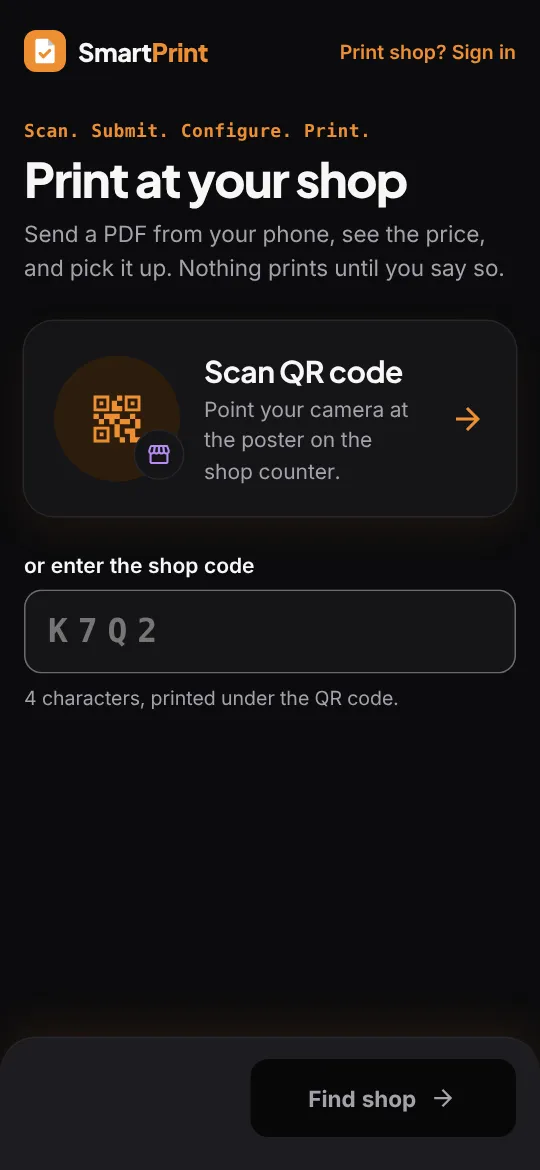
  • SmartPrint's start screen on a phone: scan the shop's QR code or enter its four-character shop code

    Our own product · SmartPrint

    Scan. Submit. Configure. Print.

    The problem: Print orders arrive on staff members' own WhatsApp and email. Each one means finding the file and asking how to print it, and customers' documents stay behind in personal chats.

    What we built: Customers scan the shop's QR code, upload a PDF, choose their print settings and see the price. The shop gets a confirmed, ready-to-print order.

    See how it works: Scan. Submit. Configure. Print.